How Artists Find Inspiration in Botanical Gardens
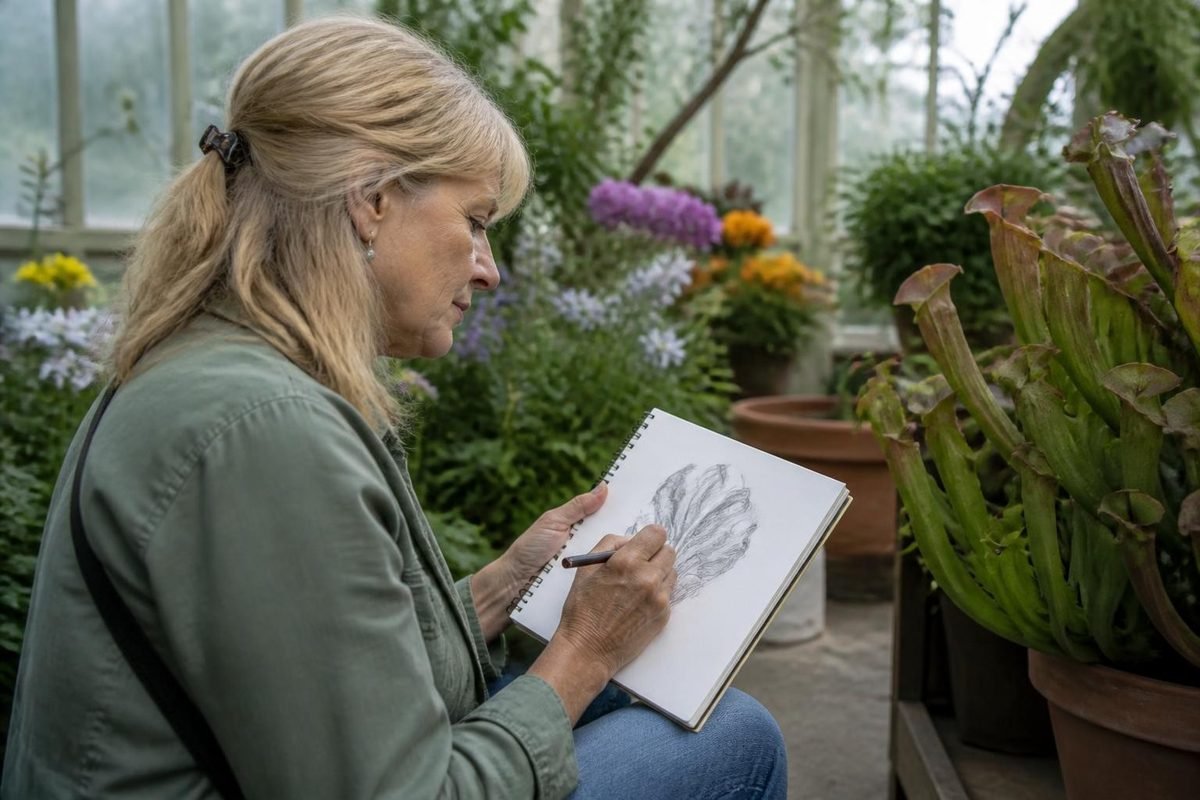
Artists can find inspiration in botanical garden collections by looking closely at plant forms, colors, textures and relationships. A visit can yield sketches and ideas for finished work, but it can also change how an artist notices the living world.
Begin with one plant
It is tempting to move quickly through a garden, collecting impressions of everything. Instead, choose one plant and spend a little time with it. Look at the shape of a leaf, the direction of a stem and the way a flower sits among its leaves.
Draw the plant once without worrying about accuracy. Then make a second sketch that pays attention to a particular detail, such as the edge of a petal or the pattern of veins in a leaf. The differences between the two drawings may suggest what you want to explore further.
Changing your position can reveal more. A flower seen from above has a different structure from the same flower viewed at its side. Look beneath leaves, too, where the light and texture may be quite different.
Notice color and pattern
A garden offers more than bright petals. Look for the muted greens of foliage, the pale underside of a leaf or the brown of a drying seed head. A small group of colors can be more useful for a painting than an attempt to record every shade in view.
Make a few quick color notes in words or with paint. Notice which colors sit next to each other and how light changes them. A green leaf in shade may look quite different from one in direct sun.
Patterns can lead to ideas for drawing, textiles or sculpture. Repeated leaves along a stem, clustered flowers and the branching shapes of trees all offer structures to study. Try isolating one pattern, then consider what happens if you enlarge it or repeat it across a page.
Use the collection as a starting point
Plant labels can give you names to record beside your sketches. These notes make it easier to return to a plant or learn more about it later. If a garden shares information about where a plant grows or how it is cared for, that context may open another line of inquiry.
Back in the studio, spread out your notes and look for connections. Perhaps several drawings share a curved line, or a set of colors recalls a particular corner of the garden. You do not have to reproduce the scene exactly. Your observations can become a starting point for a more abstract work.
Before visiting, check the garden's rules on photography, art materials and where visitors may work. Stay on permitted paths and leave plants undisturbed so others can enjoy and study them too.
Questions to take into the garden
What should I bring?
A small sketchbook and pencil are enough to begin. Add other materials if the garden permits them and you want to make color studies.
What if I cannot draw a plant accurately?
Focus on what interests you rather than making a perfect likeness. A few notes about shape, color or texture can be useful long after your visit.
Read next: florist SEO tips